Northern Utah Commercial Response

Commercial Restoration and Reconstruction Services

24/7 commercial emergency response, organized communication, and one coordinated team for water, fire, smoke, mold, drying, and reconstruction work across Northern Utah.

  • Fast dispatch for active commercial losses
  • Large-loss capability, drying capacity, and manpower
  • Documentation, insurance coordination, and clear updates
  • Occupied-space containment and reconstruction continuity
Commercial restoration crew working inside an occupied office building during reconstruction
Fast response for occupied buildings

Commercial clients need fast dispatch, clear reporting, and a contractor that can work around tenants, staff, and day-to-day operations.

24/7 Responsecommercial emergency dispatch for active losses
Large-Loss Readyequipment, planning, and scalable manpower
W9 & COI Availablevendor-readiness for property and facility teams
One Teammitigation, documentation, and reconstruction continuity

Commercial response built around speed and coordination

Commercial losses bring a different kind of pressure than residential work. The damage matters, but so do tenants, staff, occupied space, operations, scheduling, safety, reporting, and internal communication. Property managers and facility teams need a contractor that can move quickly, protect the building, and keep the job organized from the first call forward.

The focus is straightforward: emergency response, containment, drying, cleanup, reconstruction, and clear communication that helps the property team make decisions faster and keep the project moving.

Commercial Services We Handle

  • Commercial water damage restoration
  • Commercial mold remediation
  • Commercial fire and smoke restoration
  • Commercial drying and dehumidification
  • Commercial leak and water intrusion repair
  • Commercial reconstruction and repair coordination
  • Commercial insulation removal and replacement
  • Emergency response and stabilization work

Property Types We Commonly Support

  • Office and professional buildings
  • Retail and mixed-use properties
  • Industrial and light warehouse environments
  • Multifamily and apartment communities
  • Commercial landlords and asset managers
  • Facility teams and building operations contacts

How Property Teams Use This Service

Commercial clients usually need more than cleanup alone. They need emergency response, drying, coordination with building contacts, documentation for internal stakeholders, and a clear path into reconstruction so the project does not stall between phases.

Vendor Readiness And Documents

  • Request W9 and COI information
  • Emergency dispatch contact sheet
  • Vendor onboarding support for management teams
  • Preparedness walkthrough scheduling

Occupied-Space Coordination And Downtime Control

  • Occupied-space containment and phased work planning
  • Protection for unaffected work areas when possible
  • Scheduling around tenants, staff, and business activity
  • One coordinated team for mitigation, drying, and reconstruction
  • Clear updates for property managers, owners, and facility teams
  • Support for keeping operations moving whenever possible

Pre-Loss Planning And Relationship Support

  • Pre-loss walkthroughs and preparedness planning for property teams
  • Free emergency response planning conversations
  • Building moisture inspections and walkthrough support
  • CE lunch-and-learns and drying education for property teams
  • Help identifying priority areas and emergency contacts
  • Commercial references and supporting materials for qualified opportunities

What commercial clients need after the first call

a clear path from dispatch to containment, documentation, and repair planning
1

Dispatch and Site Triage

The first goal is to understand the active loss, identify business or tenant impact, and get the right response plan moving without delay.

2

Containment and Stabilization

Occupied-space protection, drying setup, dehumidification, or emergency cleanup work is organized to reduce spread and protect operations where possible.

3

Communication and Documentation

Property teams need photos, notes, moisture information, scope updates, and a contractor who can communicate clearly with internal stakeholders and insurance contacts.

4

Repair and Reconstruction Path

Commercial buyers need continuity after mitigation. Repairs, reconstruction, and follow-through should keep moving without unnecessary handoffs.

Minimizing business interruption

For commercial properties, the real cost of a loss is often not limited to damaged materials. Downtime, tenant disruption, access limitations, safety concerns, and scheduling challenges can quickly become just as important as the cleanup itself. The work is organized around containment, sequencing, occupied-space coordination, and keeping the property as functional as possible while the response is underway.

That means understanding how to work around business operations, isolate affected areas, coordinate with building contacts, and help decision-makers move faster with better information.

Communication and documentation that helps property teams

Commercial clients often need more structure around updates, reporting, and handoff clarity. Property managers, owners, facility teams, insurers, and tenants may all be involved. Organized documentation, scope updates, and direct communication with the client’s designated contact help keep the project manageable.

Photo documentation, moisture and drying records when relevant, insurer-facing organization, and a consistent point of contact all help the project move with less confusion and better internal visibility.

Large-loss capability, equipment, and manpower

Commercial buyers want to know whether a contractor can scale. The team is equipped for larger drying scopes, dehumidification needs, containment work, emergency stabilization, and multi-phase repair coordination. Even without publishing exact equipment counts, the company comes across as organized and capable of responding to more complex jobs than a basic small-loss contractor.

The key point is simple: the company brings the manpower, drying capacity, and coordination discipline needed for larger commercial losses while staying focused on response speed and communication quality.

Compliance, vendor readiness, and relationship-building

Commercial prospects often need onboarding and administrative readiness fast. W9 availability, COI support, and insurance-related documentation are part of the commercial service posture, not an afterthought. This reduces friction for facility teams, commercial landlords, and management companies that need to move quickly during an emergency.

The same page should also promote relationship-building offers such as free emergency response planning, free building moisture inspections, free preparedness walkthroughs, CE lunch-and-learns, and commercial drying education for property teams. Those services help the company build stronger relationships before the next loss happens.
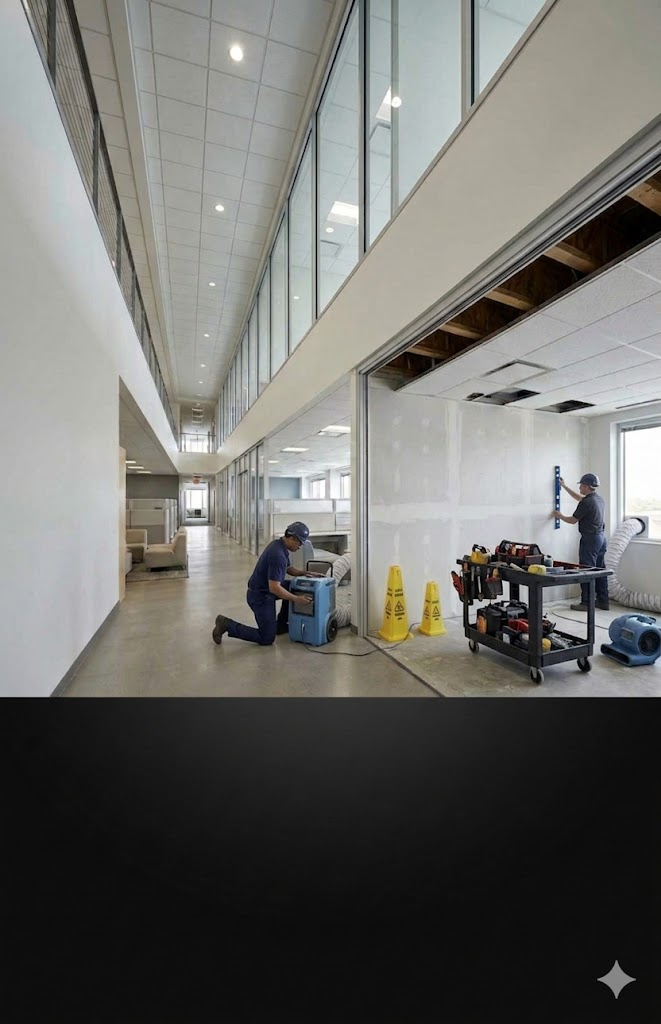
Equipment And Response Capacity

  • Commercial extraction and water removal equipment
  • Dehumidifiers and air movers for larger drying scopes
  • HEPA air filtration and containment materials
  • Moisture detection and project documentation tools
  • Scalable crew response for multi-area commercial work

Preparedness And Relationship Support

  • Free emergency response planning conversations
  • Free building moisture inspections and walkthroughs
  • CE lunch-and-learns and drying education for property teams
  • Occupied-space response planning before a loss happens
  • Help identifying priority areas and building contacts

Helpful links for commercial restoration

Use a local commercial page to compare city-specific options, or open the statewide commercial page for more detail on response, documentation, and reconstruction coordination.

Commercial buyer FAQs

common questions from property managers, landlords, facility teams, and business owners

Can you respond after hours to active commercial losses?

Yes. The team provides 24/7 emergency response and fast dispatch for active water, fire, smoke, mold, and building damage situations.

Can you work in occupied commercial spaces?

Yes. Occupied-space containment, phased work, and minimizing disruption are important parts of how the team approaches active commercial buildings.

Do you provide W9 and COI information?

Yes. Vendor-readiness items such as W9 and COI support are available and can be provided quickly when onboarding is needed.

Can you support larger losses?

Yes. The commercial team is set up to support larger losses with drying capacity, manpower, documentation, and coordinated project response.

Do you offer preparedness help before an emergency happens?

Yes. Free emergency response planning, building moisture inspections, preparedness walkthroughs, and commercial education offers are available for property teams that want to prepare before a loss happens.

Need commercial emergency response or pre-loss planning?

Call now for an active loss, request a commercial callback, or ask for W9 / COI / preparedness support.