1
Assess Smoke Spread
The team checks how far residue, odor, and air-path contamination have moved through the structure, not just where the fire started.
Soot removal, odor control, contamination cleanup, and restoration support after kitchen fires, appliance fires, structural fires, and smoke events.
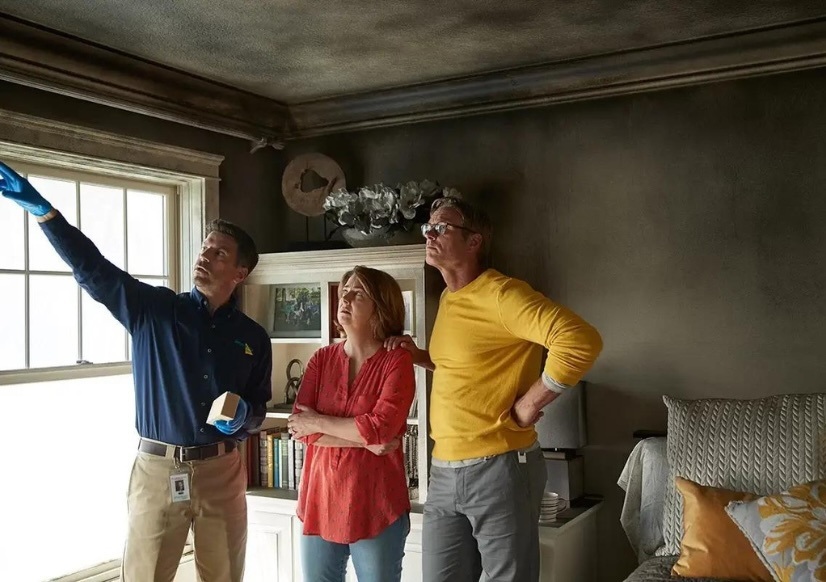
Smoke damage spreads farther than most owners expect. The challenge is not just what you can see, but what settles into air pathways, fabrics, and porous materials.
Smoke damage is easy to underestimate because it moves beyond the obvious burn area. Residue can reach walls, ceilings, cabinetry, textiles, HVAC systems, and contents far from the original source. That is why smoke cleanup should not be treated like a quick wipe-down project. It needs a process.
Smoke damage is a real restoration problem that often involves surface cleaning, odor control, documentation, and repairs. That helps property owners understand why professional cleanup matters even when the fire itself seemed relatively contained.
The team checks how far residue, odor, and air-path contamination have moved through the structure, not just where the fire started.
Affected areas are controlled so cleanup can begin without spreading soot and odor deeper into unaffected spaces.
Residue removal, targeted cleaning methods, and odor-treatment strategies help make the property safe and usable again.
Scope details, content impact, and follow-on repairs are organized so the insurance process and rebuild decisions move more cleanly.
Soot and smoke residue do not stay politely on one wall. They cling to ceilings, infiltrate vents, settle into soft goods, and leave behind odors that linger even after a room looks cleaner. A strong smoke-damage page needs to make that clear, because many customers underestimate the scope until the smell keeps coming back or residue starts showing up in adjoining spaces.
That makes this service a useful bridge between emergency fire response and broader restoration planning. It communicates that the team understands the less obvious side of a fire loss and can help turn a vague “it still smells like smoke” problem into a documented cleanup and repair process.
Visual cleanup and real resolution are not always the same. A room may look better while odor-causing residue remains in porous surfaces, contents, insulation, or ductwork. That is why odor control needs its own plan as part of the restoration process.
No single method solves every smoke-loss job. The right approach depends on the materials affected, the severity of the residue, and how far odor has spread through the property.
Yes. Smoke can travel through hallways, vents, cabinets, and wall openings, so residue and odor often show up outside the original burn area.
Yes. Surface cleaning helps, but odor can remain in porous materials and hidden spaces, so smoke cleanup needs a broader treatment approach.
They can. Even a contained kitchen or appliance fire may spread soot and odor through nearby rooms or ventilation pathways.
Often yes. Clear photos, scope notes, and documentation help support the claim conversation around contamination and restoration work.
Share a few details and the team can follow up as quickly as possible.