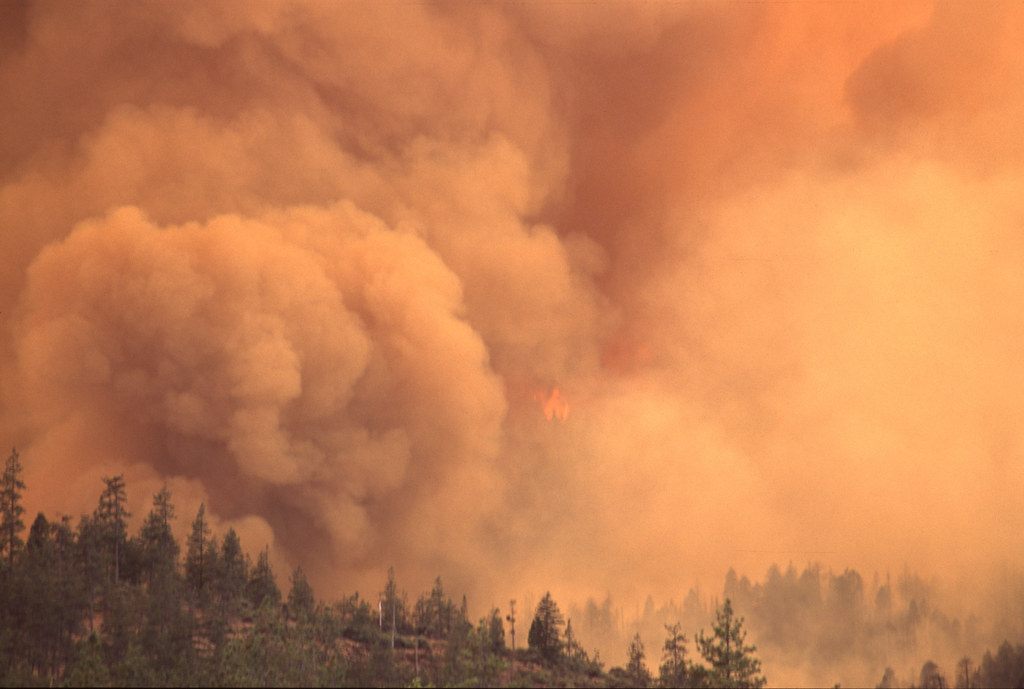
June 2026 Bonneville Fire — Smoke Damage Assessment & Restoration
- Recovery resources and next steps
- Insurance claim guidance
- Lessons learned for future prevention
- Professional restoration support
Every hour smoke residue sits, it penetrates deeper into porous materials — making professional cleanup harder and more expensive.
Live Conditions
Real-time weather radar for Utah
- Open windows for ventilation if safe to do so
- Do NOT wipe soot — it pushes residue deeper into surfaces
- Avoid using HVAC until ducts are inspected
- Wear a mask if you smell smoke indoors
- Remove perishable food exposed to smoke
Wildfire Smoke Damage Cleanup Guide for Utah Homeowners
When wildfire smoke blankets the Salt Lake Valley, the damage doesn't end when the fire is contained. Homeowners across the Wasatch Front — from the Avenues and Capitol Hill to the east bench neighborhoods and communities along the west side of the valley — have experienced firsthand how smoke infiltrates homes and lingers long after skies clear. This guide covers what Utah homeowners need to know about smoke damage, and how the Disaster Repair Team (DRT) helps families recover.
If your home has sustained smoke damage, call DRT for a free assessment: 385-287-6344 — available 24/7.
How Wildfire Smoke Damages Utah Homes
Wildfire smoke is far more than an unpleasant odor. Microscopic soot particles, volatile organic compounds (VOCs), and carcinogenic byproducts infiltrate homes through HVAC systems, open windows, and building gaps during a smoke event. These particles settle on every surface — walls, furniture, clothing, ductwork, and insulation — causing lasting damage that compounds over time if not properly addressed.
Even homes located miles from an active fire line have sustained significant smoke damage in past Utah wildfires. A home's HVAC system actively draws contaminated outside air indoors during smoke events, distributing particles through every room. Standard air filters are not designed to capture ultrafine wildfire particulates, meaning many homeowners discovered contamination had spread throughout their entire duct system before they realized the extent of the problem.
Common Smoke Events Affecting the Salt Lake Valley
Utah's wildland-urban interface creates recurring smoke exposure risk for communities including Salt Lake City, the University of Utah area, the Avenues, Capitol Hill, Federal Heights, and east bench neighborhoods. Fires originating in the Wasatch foothills — areas near Red Butte Canyon, City Creek Canyon, and the Bonneville Shoreline — have historically pushed heavy smoke into densely populated valley communities. Wind patterns during past events have also carried smoke as far as Eagle Mountain and the west valley.
After any significant smoke event, air quality in affected areas typically worsens during cooler evening hours as smoke resettles at ground level, continuing to push contaminated air into homes even after daytime fires are reduced.
Why Smoke Damage Requires Professional Attention
Homeowners who attempted to address smoke damage on their own following past Utah wildfires often found that surface cleaning alone was insufficient. Smoke particles that penetrated HVAC ductwork, insulation, and porous materials continued to off-gas odors and contaminants for months. Professional remediation addresses the full scope of infiltration — not just visible soot on surfaces.
Acting promptly after a smoke event matters. Soot that is left on surfaces reacts chemically over time, permanently staining walls, discoloring fabrics, and corroding metal fixtures. Smoke residue that settles into ductwork recirculates through your home with every HVAC cycle until the system is professionally cleaned and decontaminated.
What DRT Does to Restore Smoke-Damaged Homes
- Indoor air quality testing and damage assessment
- HEPA air scrubbing and filtration
- Full HVAC duct cleaning and decontamination
- Surface cleaning and soot removal
- Ozone treatment for persistent odor elimination
- Contents cleaning and restoration
- Insurance documentation and claim coordination
Call DRT to schedule your free smoke damage assessment: 385-287-6344
Lessons Learned from Past Utah Wildfire Events
Responding to smoke damage events across the Wasatch Front has taught DRT and Utah homeowners several important lessons:
- Turn off your HVAC immediately when smoke is visible outdoors. Homeowners who kept systems running during past smoke events experienced significantly greater interior contamination than those who shut systems down and sealed gaps early.
- The smell alone is not a reliable damage indicator. After previous Salt Lake Valley fire events, air quality testing revealed significant particulate contamination in homes where residents reported only mild odor — particularly in lower levels and interior rooms where particles had settled.
- Standard HVAC filters are not enough. Many homeowners were surprised to learn that even recently replaced standard filters had allowed ultrafine wildfire smoke particles to pass through and coat duct interiors during past events.
- Insurance documentation benefits from professional assessment. Homeowners who obtained a professional smoke damage assessment report before filing claims reported smoother claims processes than those who attempted self-documentation.
- Act before odors return. A pattern observed after multiple Utah wildfire events: homeowners who delayed remediation found that smoke odors initially diminished, then returned noticeably when temperatures rose — because heat reactivated residue embedded in building materials and ductwork.
- Even distant neighborhoods are not protected. Communities several miles from a fire perimeter have sustained interior smoke contamination requiring professional remediation. Distance from the fire line is not a reliable indicator of whether your home needs assessment.
Schedule Your Free Smoke Damage Assessment
DRT has helped Utah homeowners recover from smoke damage events throughout the Salt Lake Valley and surrounding communities. Whether your home was impacted by a recent fire or you are concerned about residual damage from a past event, our team provides thorough assessment, documentation, and full restoration services.
Call the Disaster Repair Team anytime: 385-287-6344 — 24/7 response, free assessment, and complete insurance coordination.
Affected Areas
Select a city for location-specific emergency information and restoration resources.
What to Expect When You Call
Here's how DRT responds to emergency calls:
Need Help Now?
The Disaster Repair Team provides 24/7 emergency restoration services across Utah.
Request Help Online